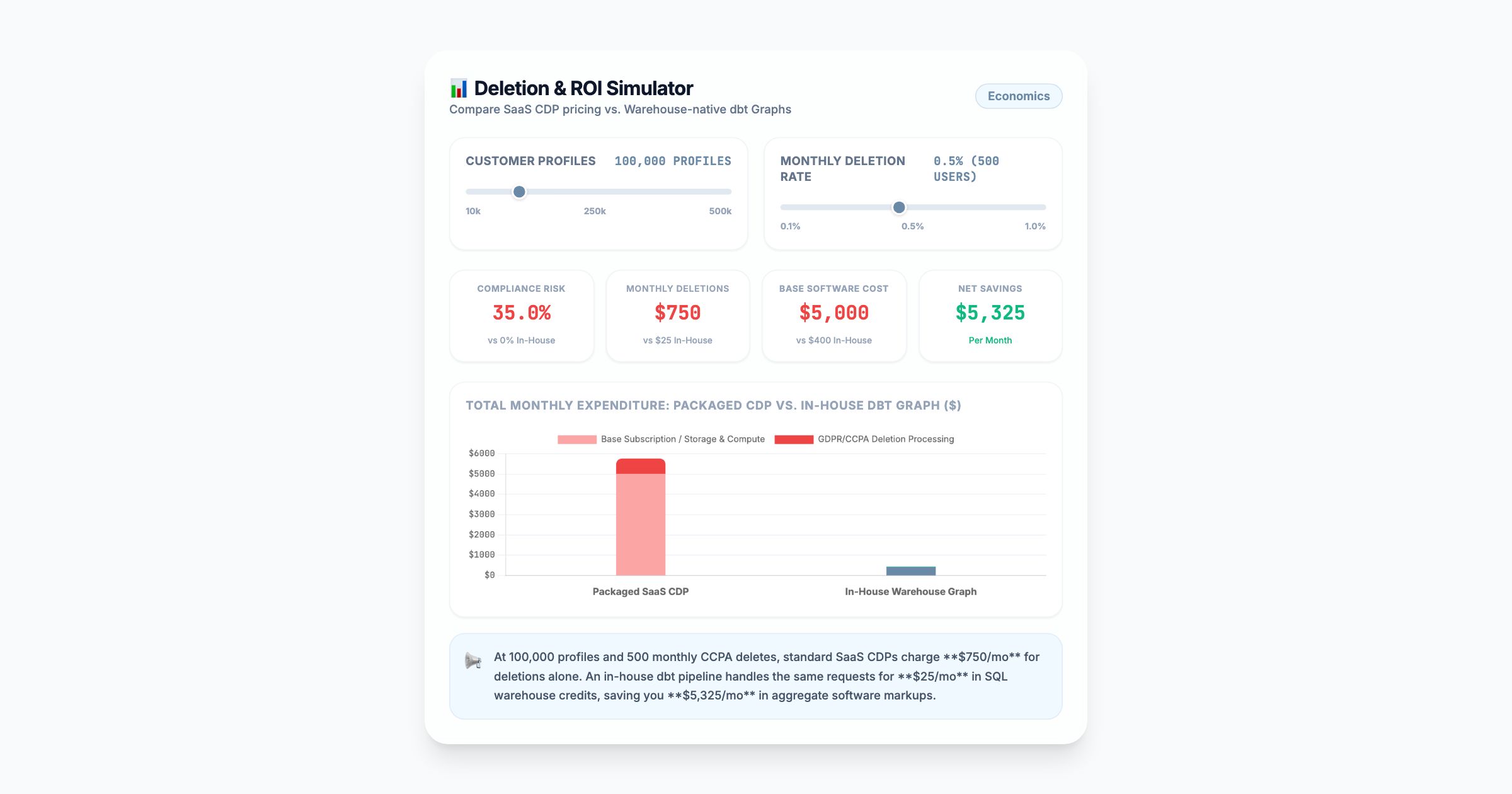
🧩 The Architect's Guide to Building an In-House Identity Graph
Why packaged CDPs create a CCPA/GDPR compliance trap, and how a warehouse-native dbt identity graph balances hyper-personalization with privacy-first tiered consent.

Why packaged CDPs create a CCPA/GDPR compliance trap, and how a warehouse-native dbt identity graph balances hyper-personalization with privacy-first tiered consent.
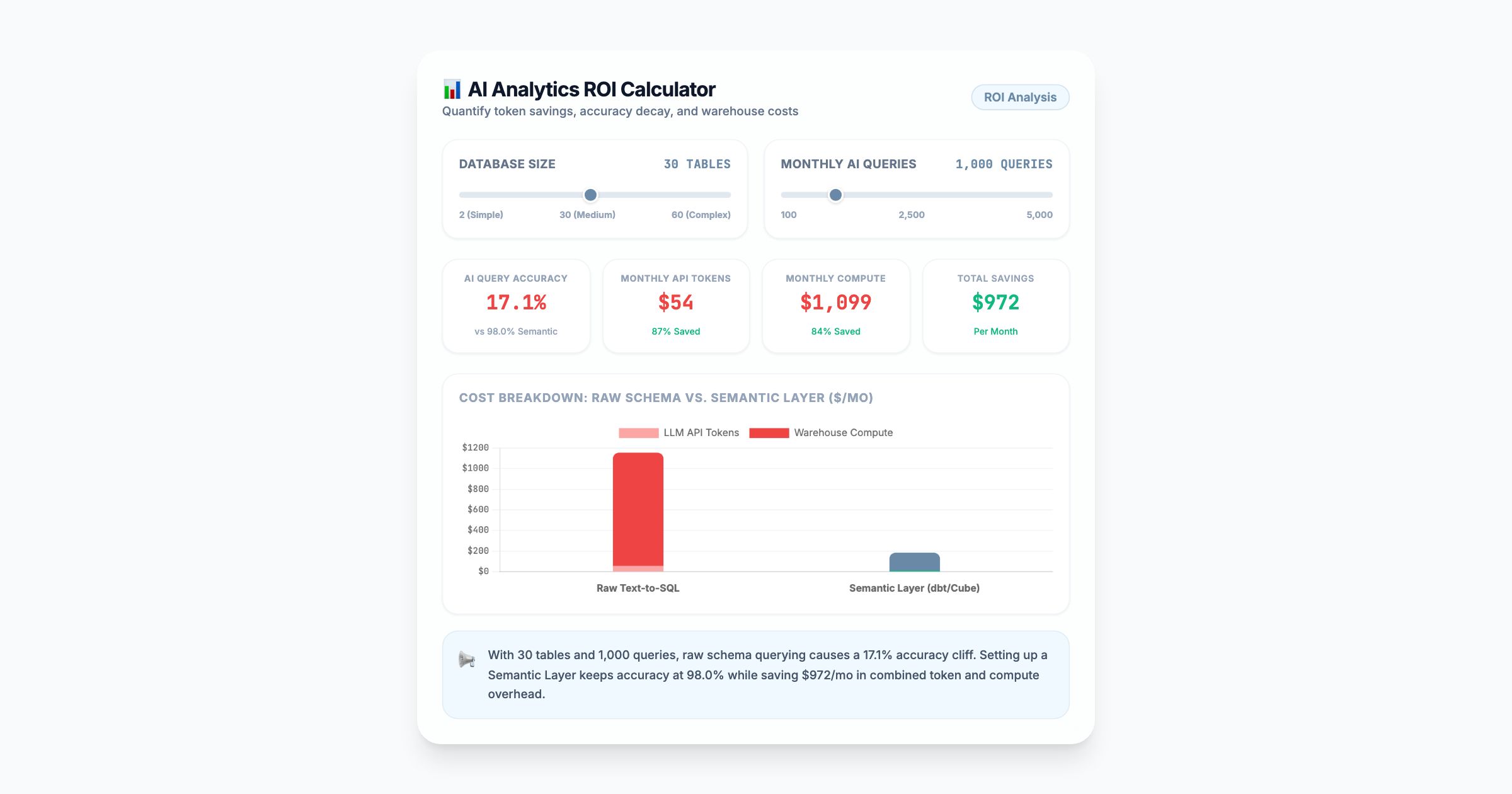
Why raw Text-to-SQL is a semantic gamble that inflates data warehouse compute bills, and how a governed Semantic Layer stabilizes AI query accuracy to 98%.
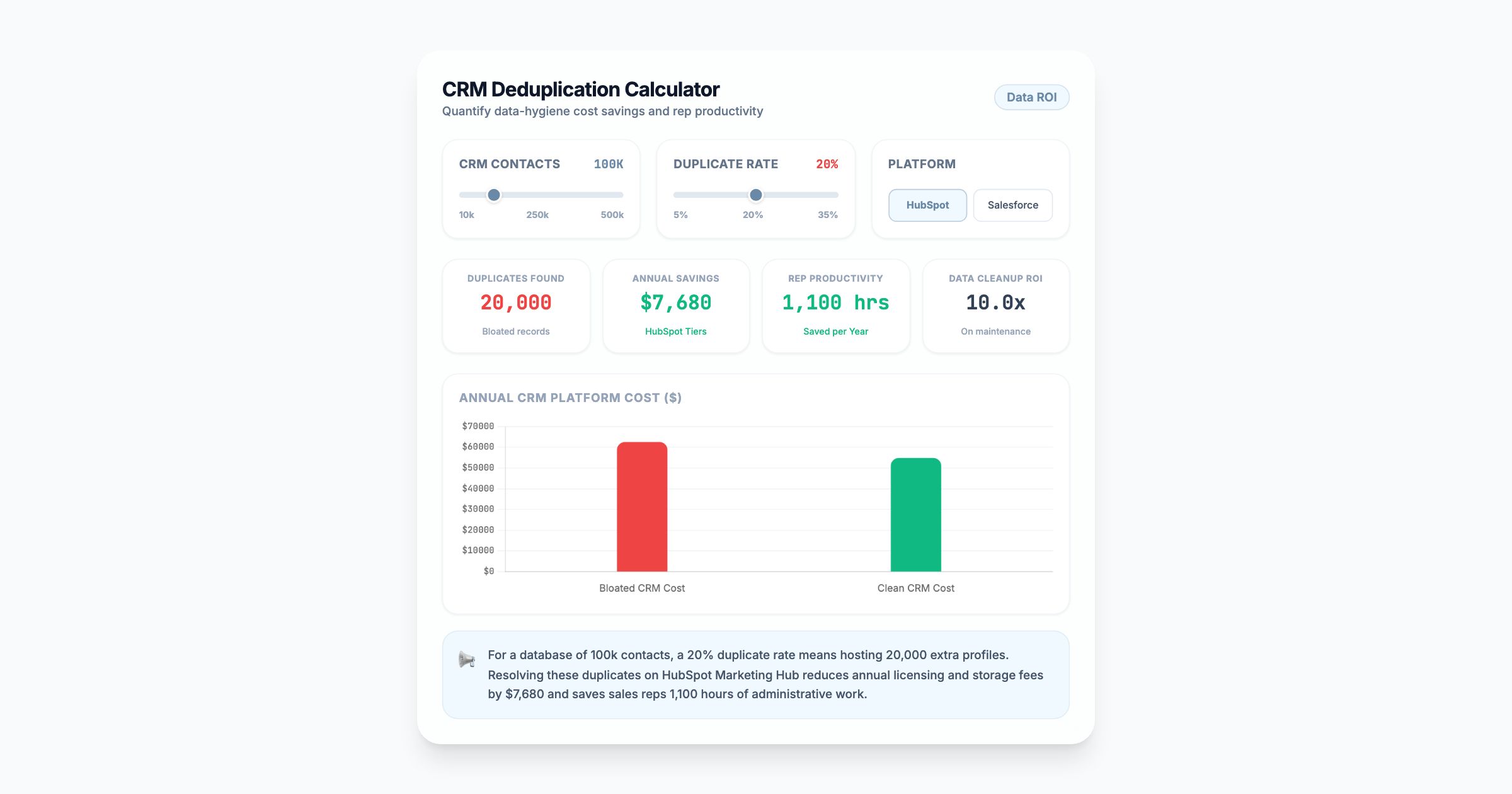
Why Customer Data Platforms are locking your data in rigid silos, and how building a custom identity graph in your data warehouse deduplicates your CRM.
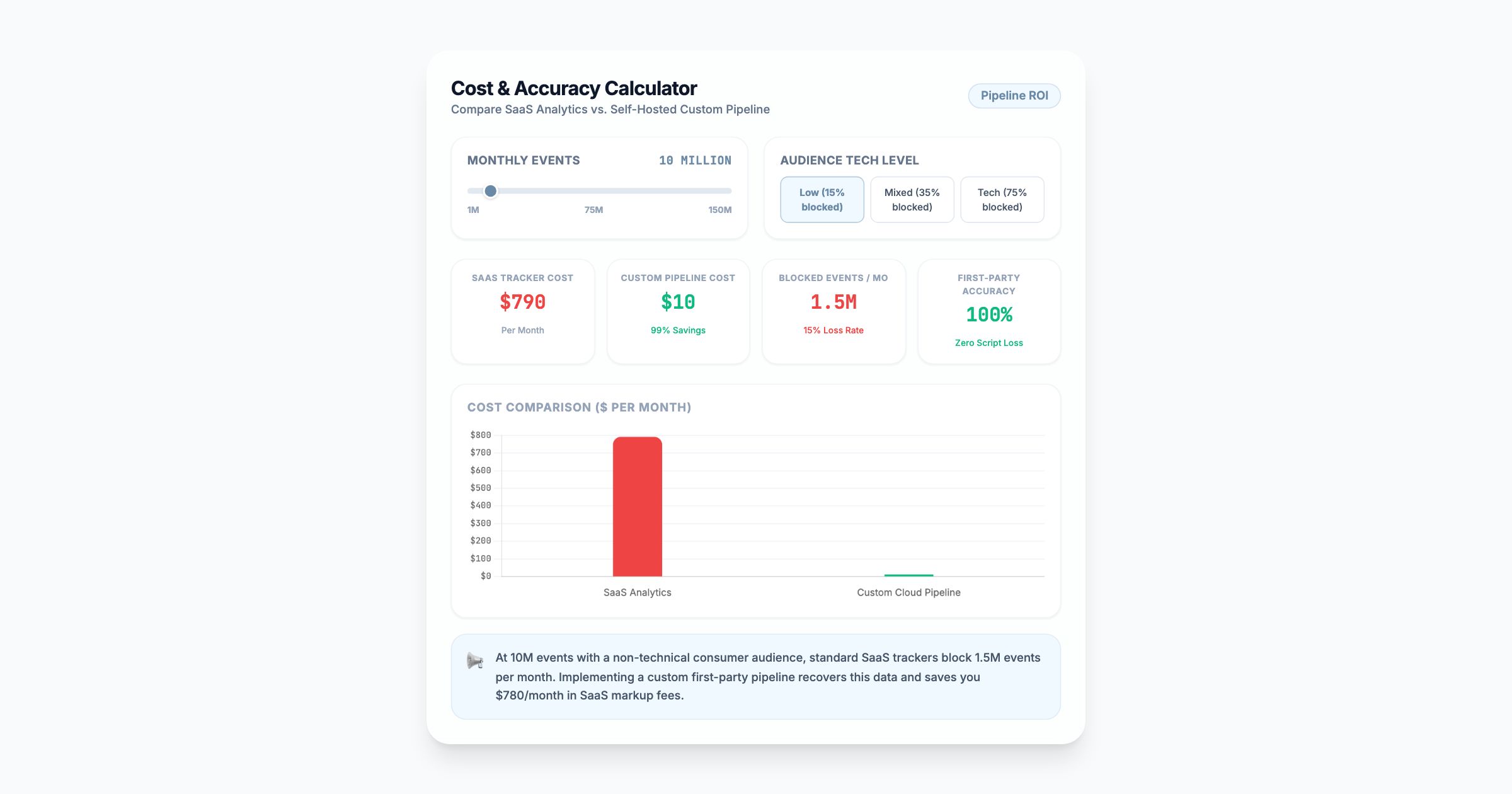
Why relying on packaged analytics platforms causes you to lose up to 40% of your data, and how building a custom event pipeline unlocks true data sovereignty.
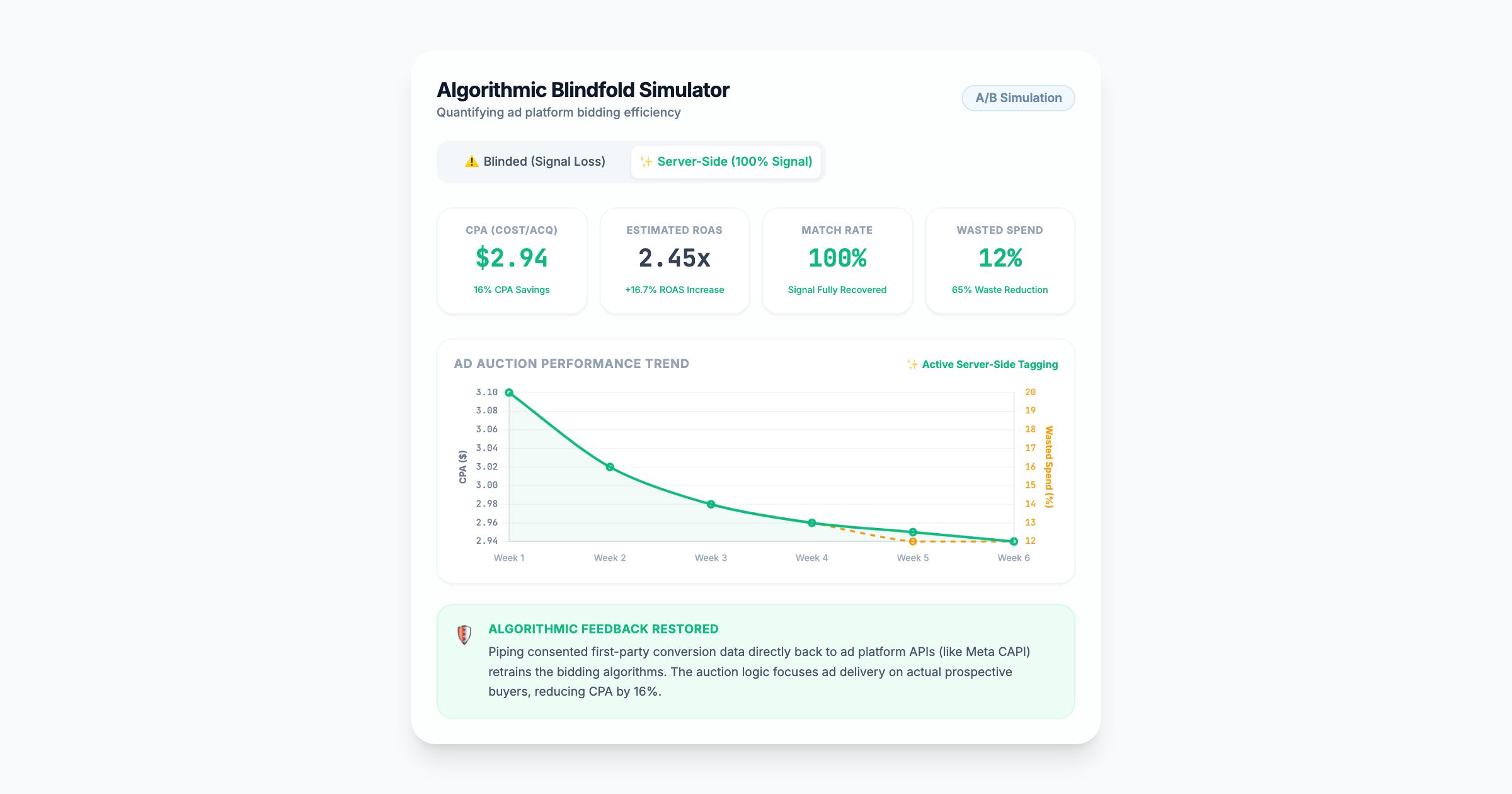
Why traditional marketing attribution is failing and how a first-party identity loop retrains ad platform algorithms to lower CAC.
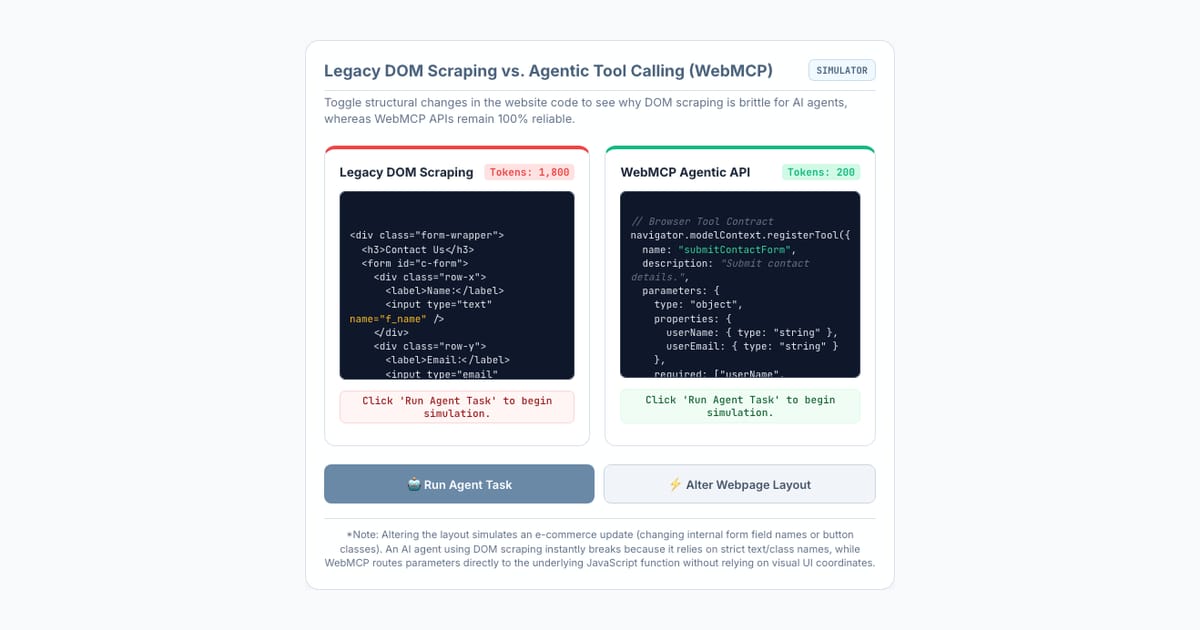
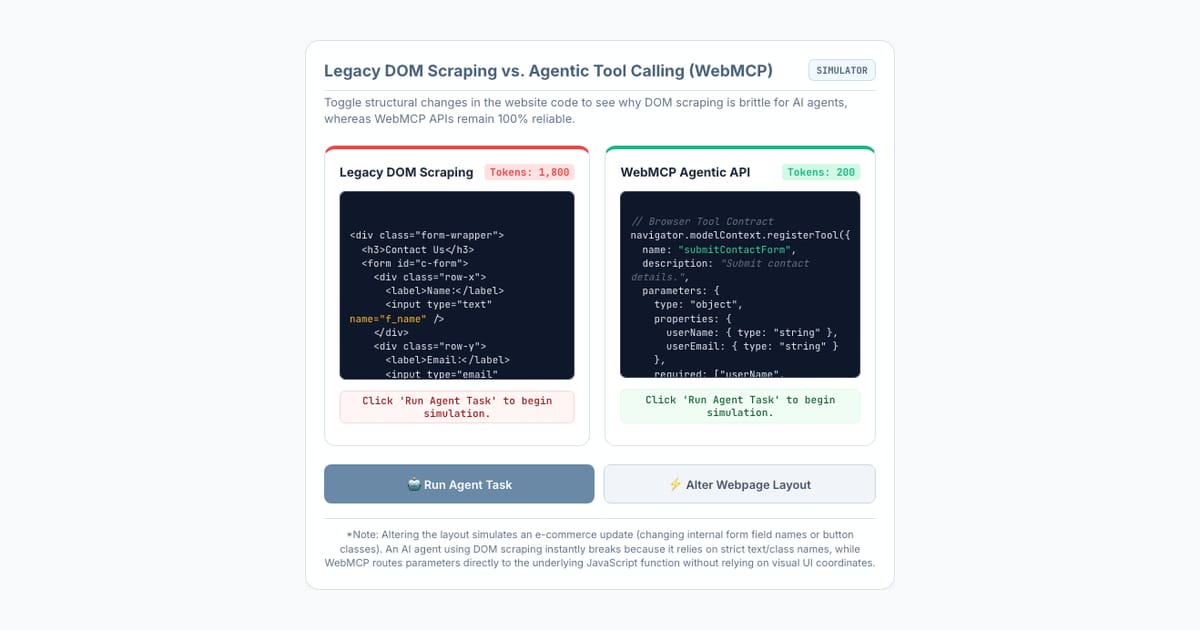
How the rise of agentic AI is turning APIs from background developer utilities into the primary interface of the web—and how preparing for this shift improves your internal data quality.
Why vibe-based prompt adjustments are costing your business thousands, and how a structured evaluation framework connects LLM quality metrics directly to growth.
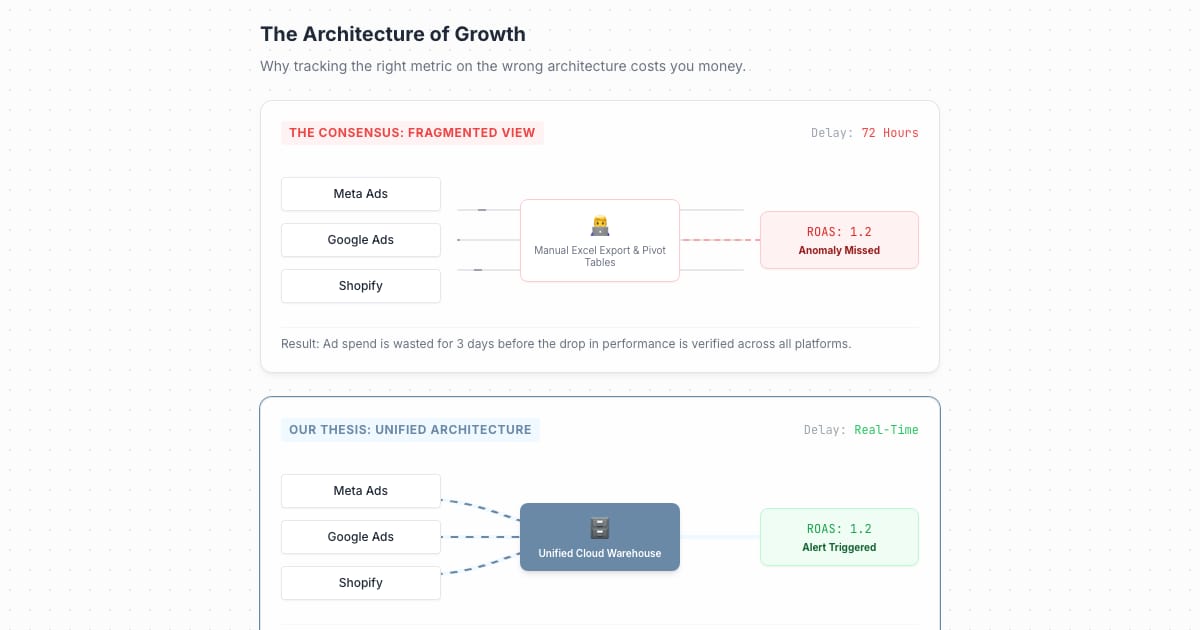
Why tracking the right metrics won't save you if you have the wrong data views—and how modern architecture drives better returns.
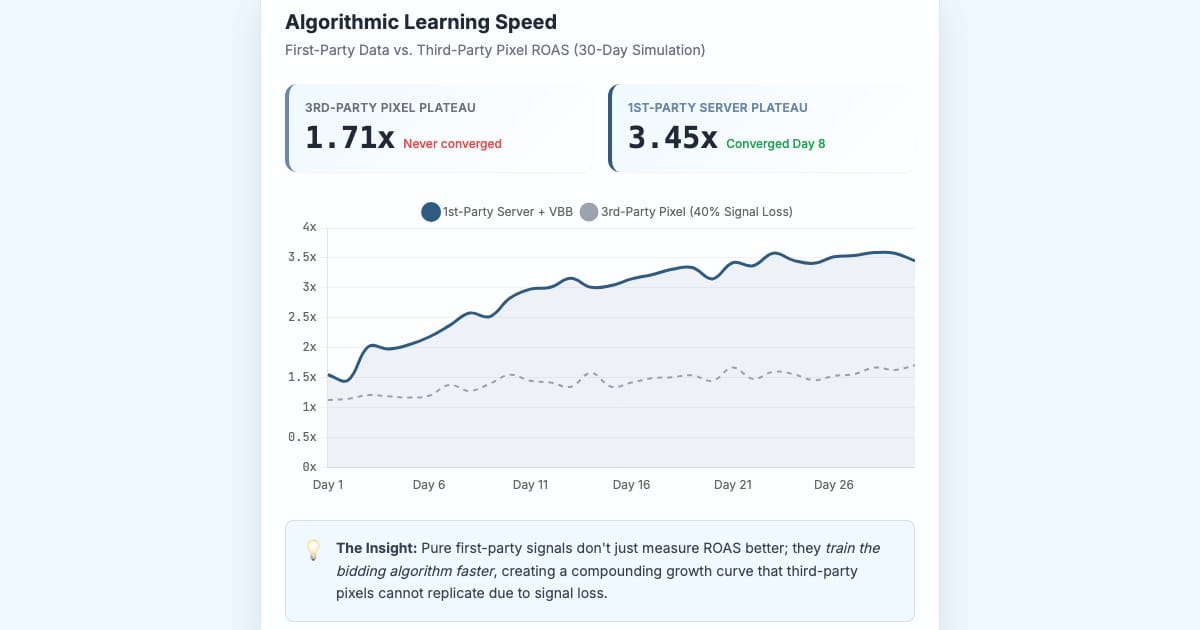
Why feeding first-party data to your DSP isn't just about targeting—it's about training the bidding algorithm to exponentially multiply your ROAS.
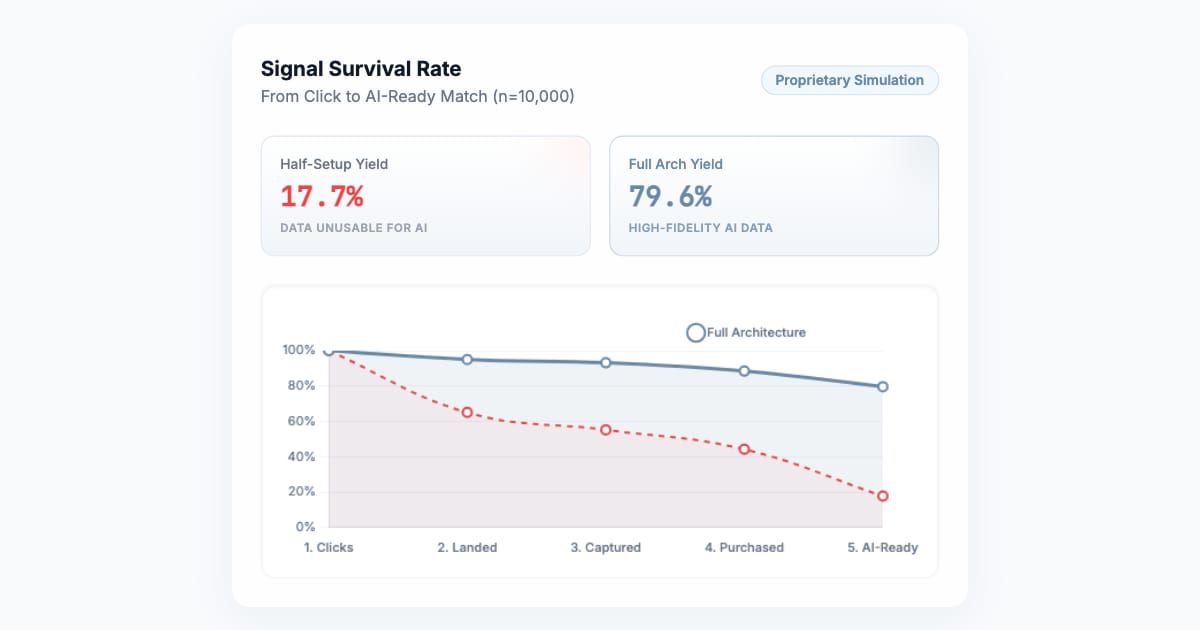
Why simply collecting first-party data is no longer enough, and how fixing your data architecture stops invisible signal loss.
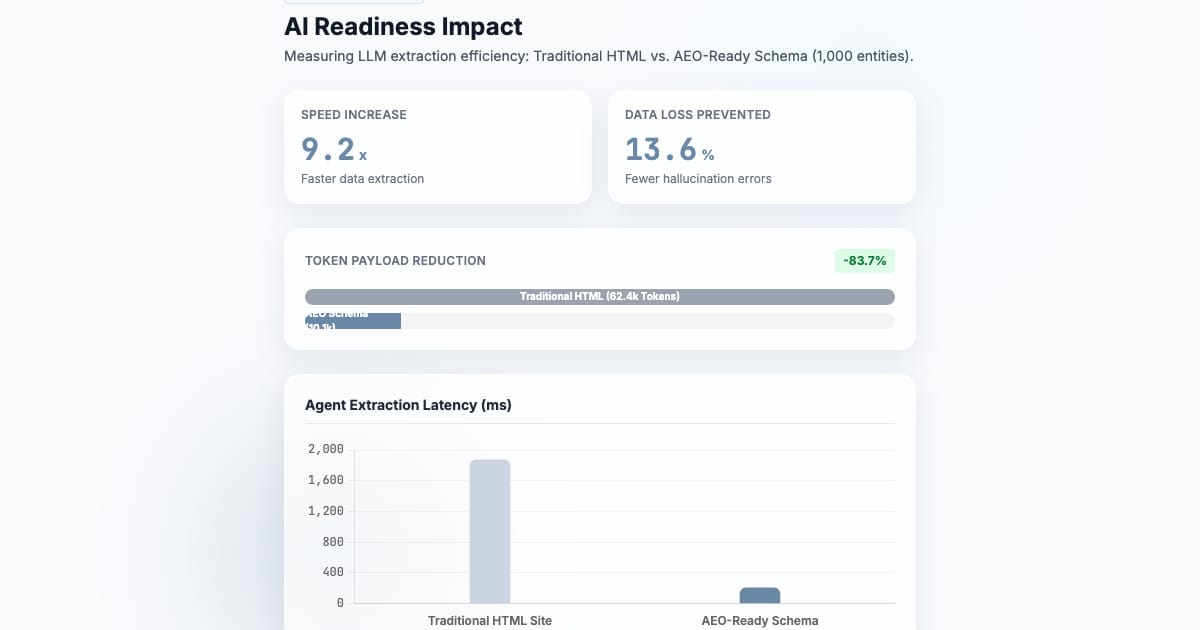
Why traditional marketing is failing and how data-driven technical architecture is replacing it. Our proprietary 1,000-entity simulation reveals a 9.2x speed increase and 13.6% reduction in data loss when optimizing for AI agents.
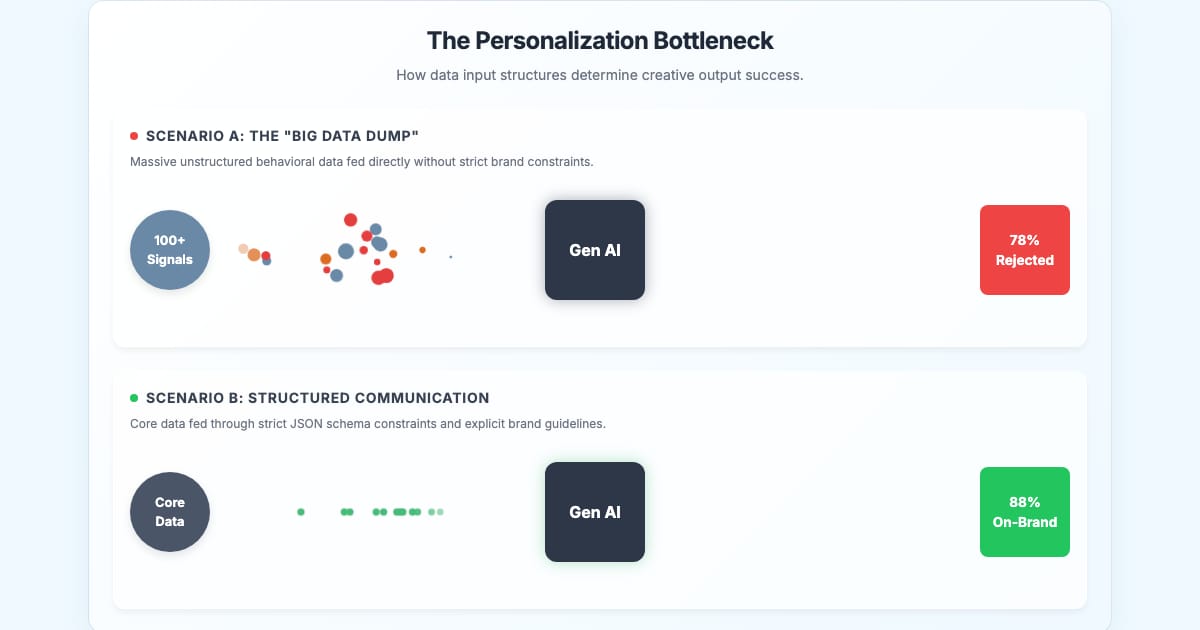
Why the secret to scalable, hyper-personalized creatives isn’t more customer data—it’s how strictly you communicate your brand’s identity to the AI.

AI-Ready with Data
Why relying on platform ad data is costing you money, and how old-school econometrics is the new secret weapon for scalable growth.
AI-Ready with Data
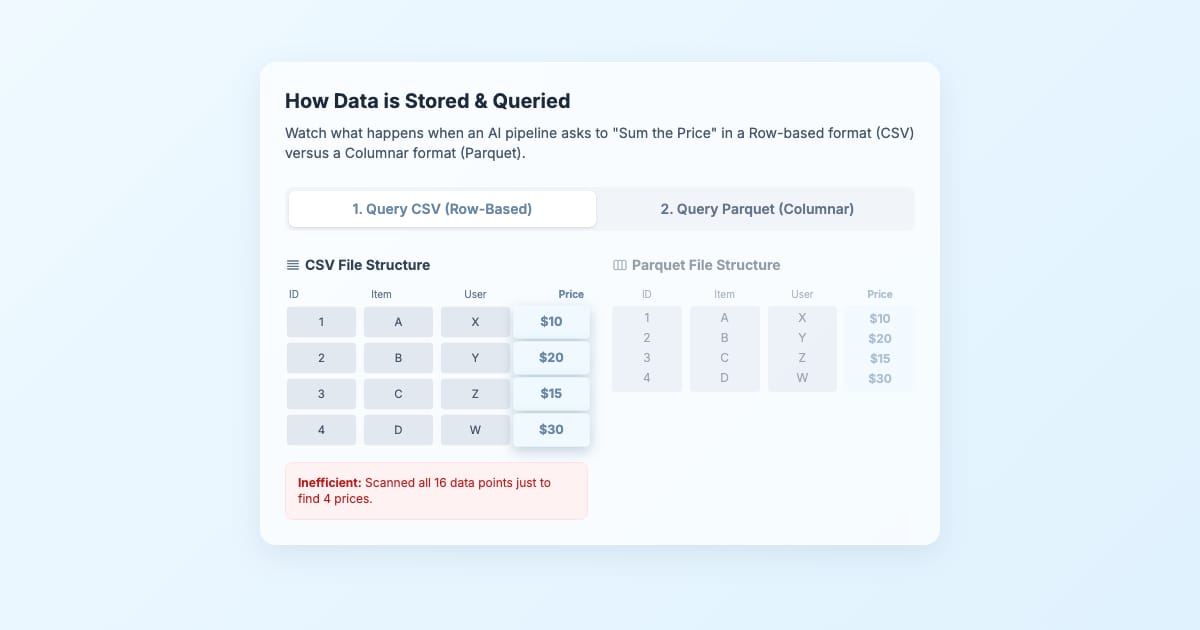
Why your choice of file format is the hidden bottleneck in the Modern Data Stack—and how it impacts your AI readiness.
AI-Ready with Data
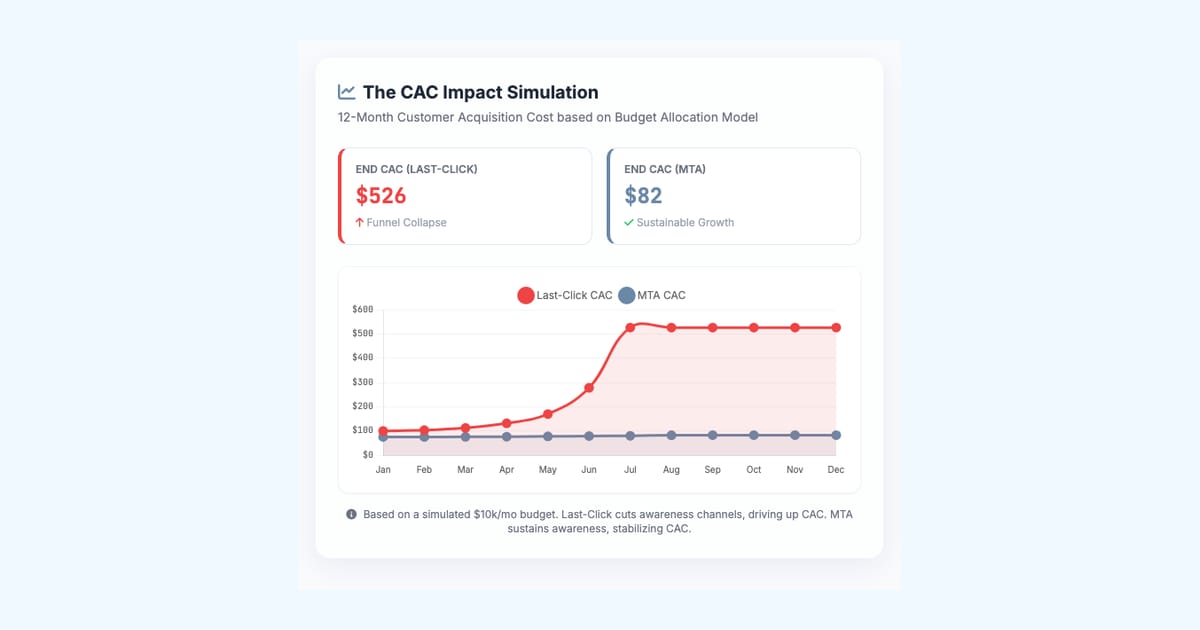
Why the "Last-Click Illusion" is starving your marketing funnel, and how Multi-Touch Attribution structurally lowers Customer Acquisition Cost.
AI-Ready with Data
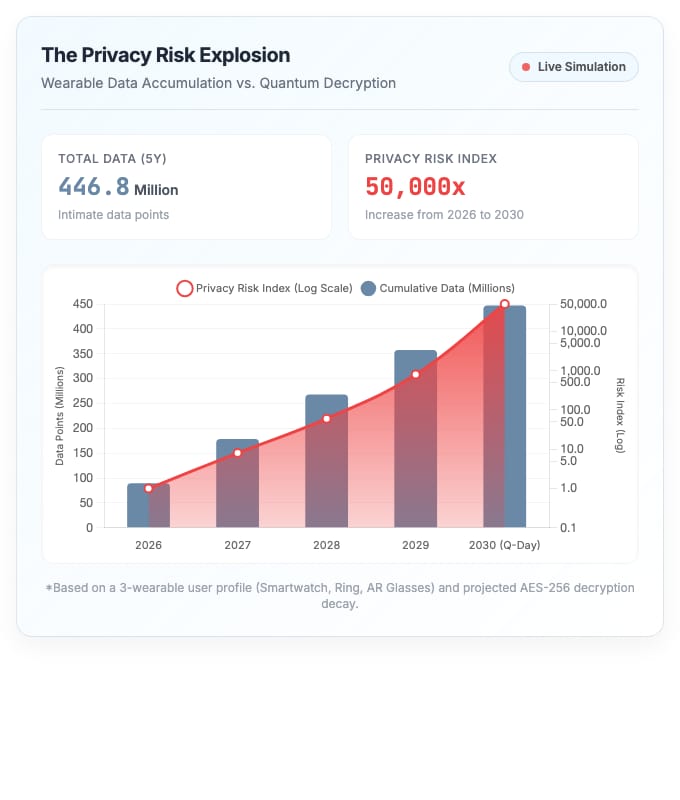
Why the convergence of "Harvest Now, Decrypt Later" attacks and always-on wearables is creating an inevitable surveillance state, and how to take back control.
AI-Ready with Data
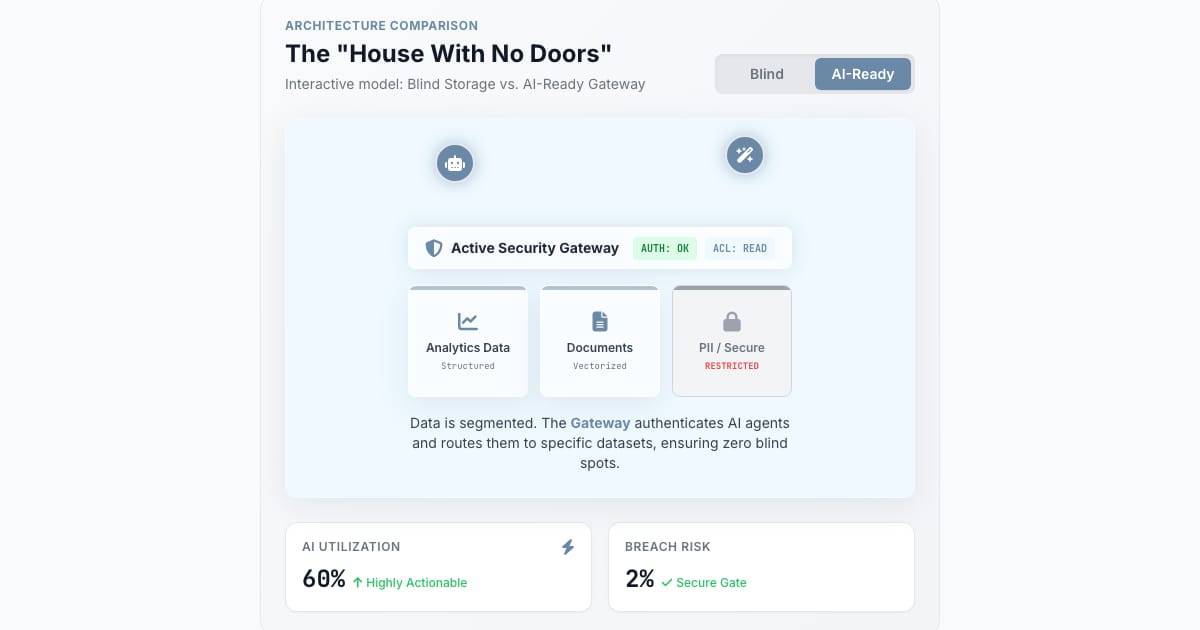
Many businesses hoard data thinking it makes them AI-ready. Here is why prioritizing secure, integrated pathways over sheer volume yields the highest returns.
AI-Ready with Data
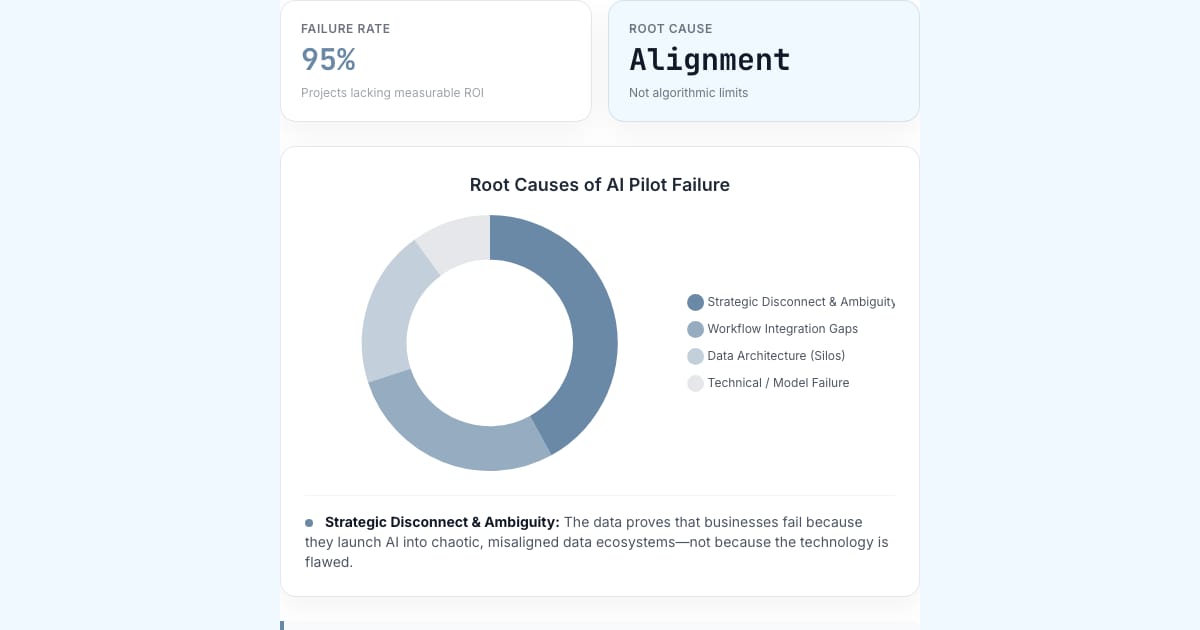
Why getting your data ready for AI is really an exercise in radical business clarity—and why it pays off immediately even if you never launch a model.
Sell More with Data
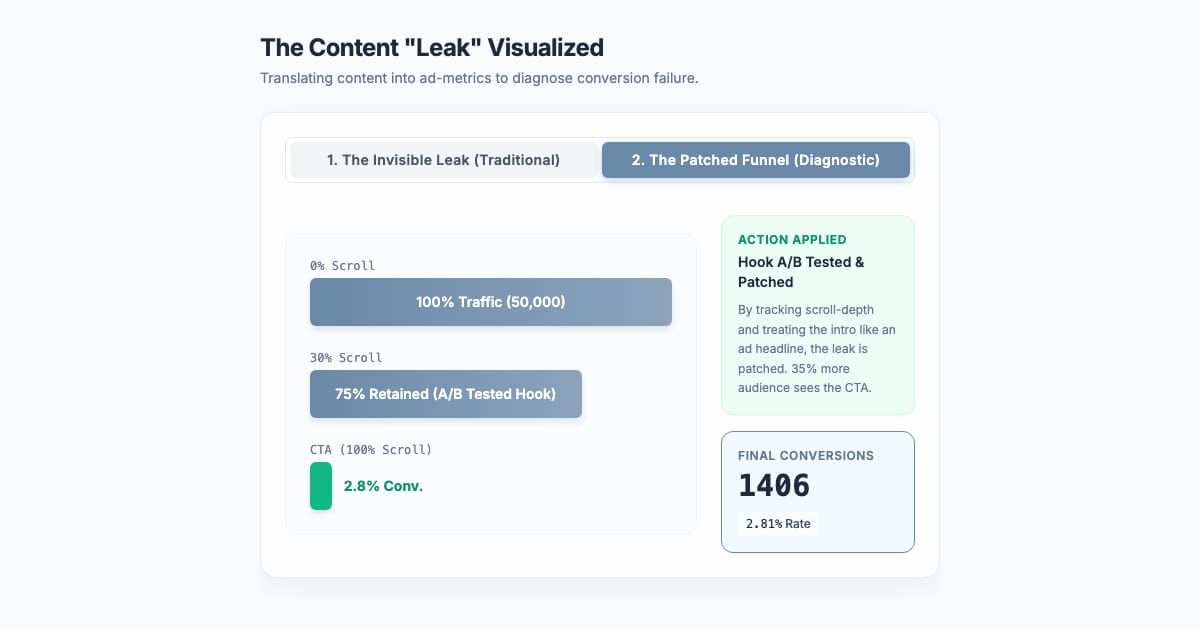
Why treating content like generalized brand-building is failing, and how translating creatives into rigorous ad-style data reveals exactly where your strategy is leaking.
AI-Ready with Data
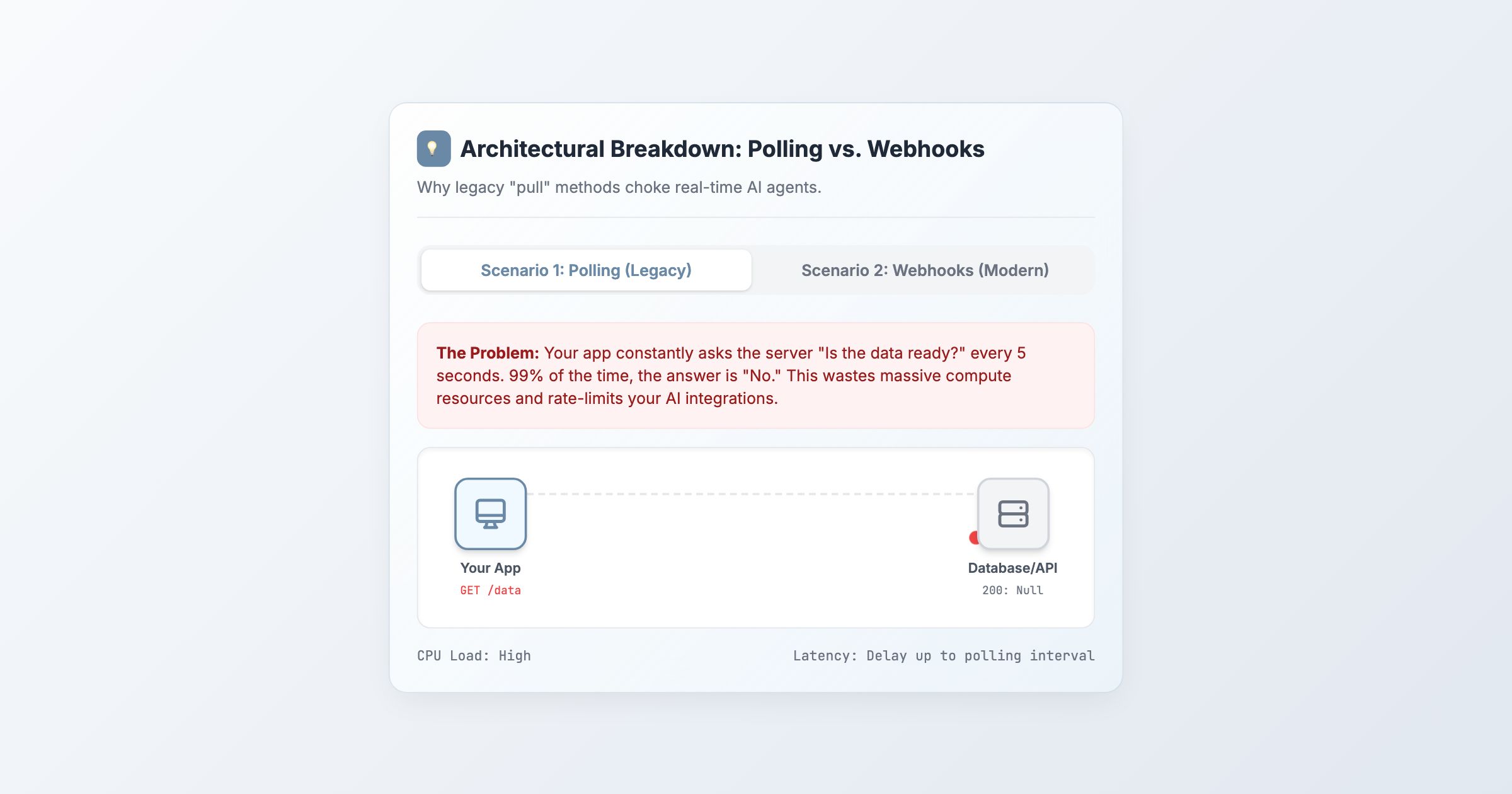
AI can write your syntax, but it cannot fix your data architecture if you don't conceptually understand how webhooks actually work.
Sell More with Data
Why tracking 30 different KPIs is a distraction, and how shifting to Funnel Data Architecture is the secret to scaling.
Sell More with Data
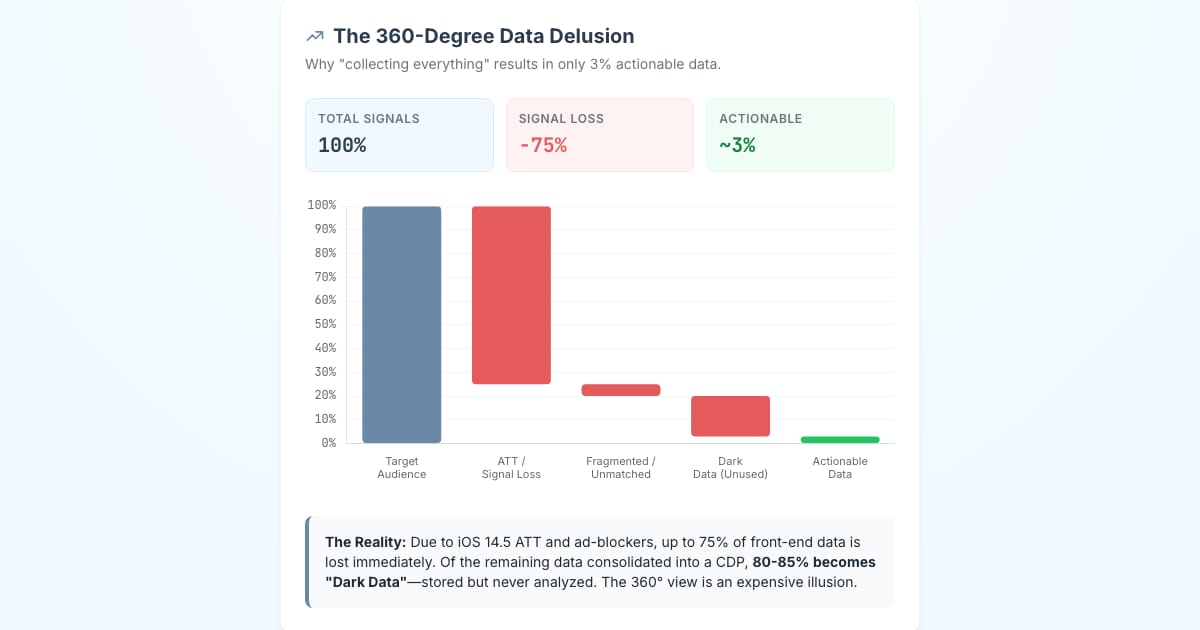
Why the pursuit of a perfect 360-degree customer profile creates expensive data lakes of unused information, and how server-side architecture provides a leaner, higher-ROI alternative.
Sell More with Data
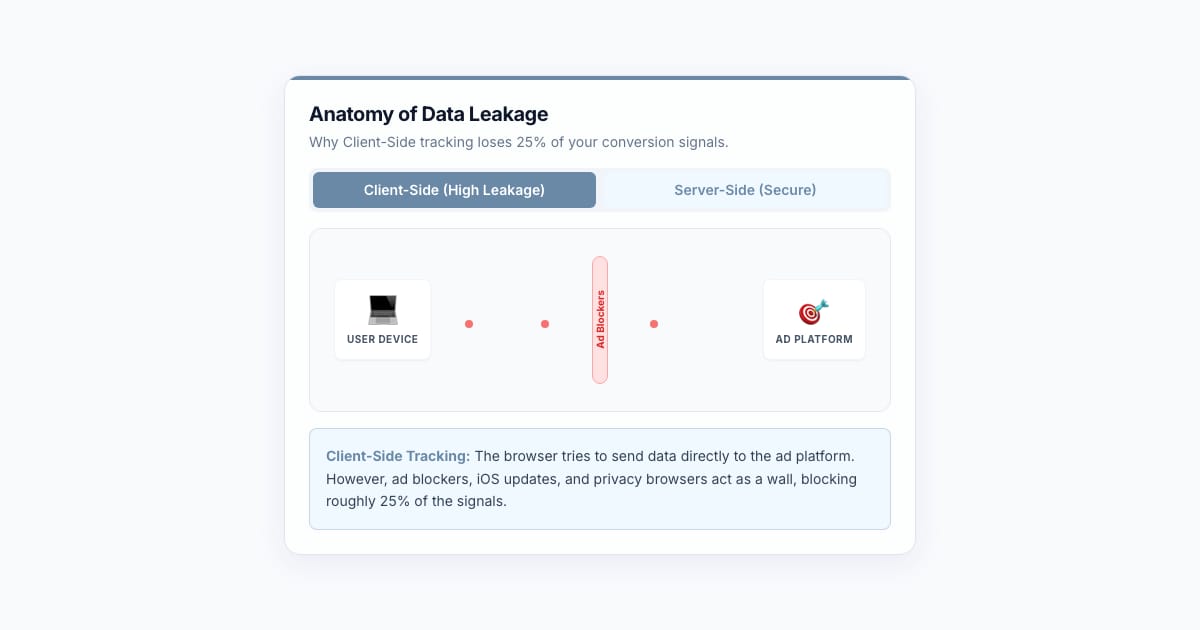
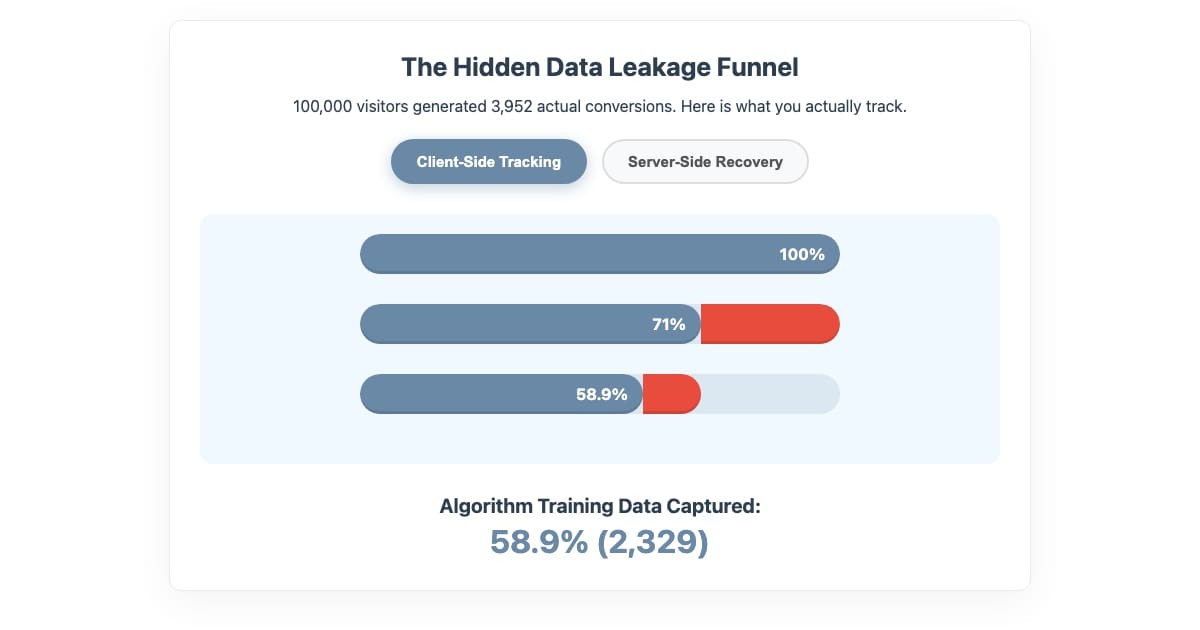
Why traditional marketing tracking is failing, and how shifting to a server-side data architecture can instantly recover 61% of your lost sales data.
AI-Ready with Data
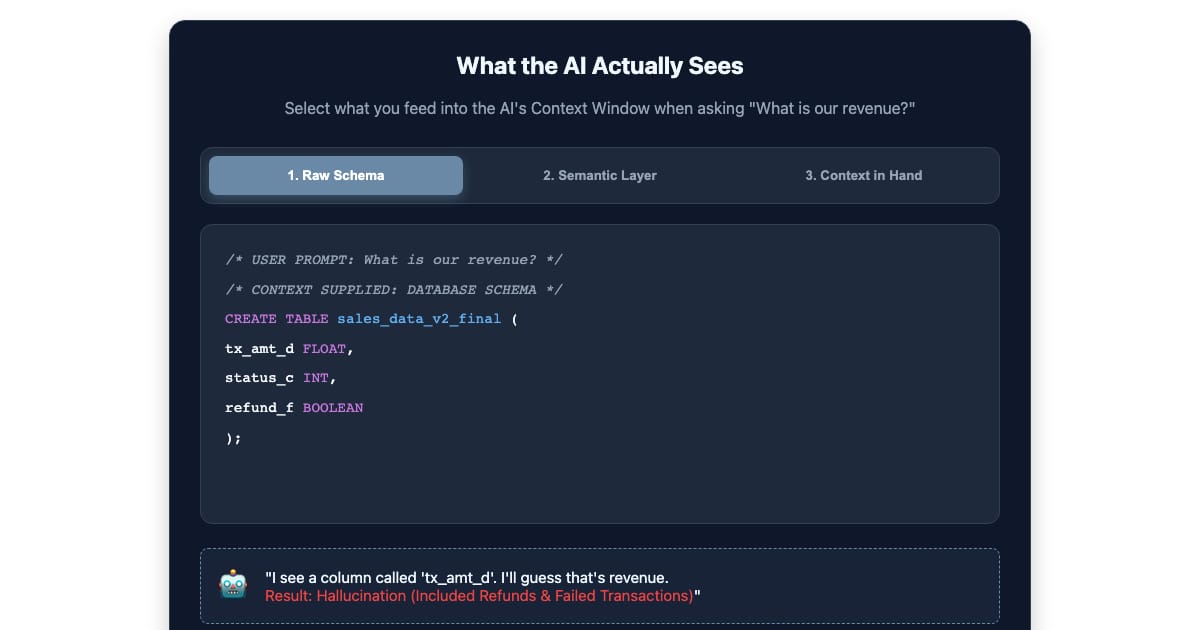
Why the Modern Data Stack’s obsession with semantic layers is creating an AI bottleneck, and how going "back to basics" with contextual documentation prevents hallucination errors.